By Skip Estes, Director of Government Affairs, SAFE
In a letter to a friend, Benjamin Franklin once remarked, “in this world nothing can be said to be certain, except death and taxes.” If Dr. Franklin were still around today, he might add a third item to this list: politicians proposing gas tax holidays in response to high prices. This week, as average nationwide gas prices reached $4.50 per gallon, President Trump announced he will pursue a gas tax holiday. Many Congressmembers seem ready to oblige, but this is not a new idea. The Federal government, states, and localities have considered gas tax holidays to address high prices consistently for the past 25 years, but they rarely achieve their intended benefits at worthwhile cost. Gas tax holidays pose a risk of not generating expected consumer benefits, defunding an already insufficient Highway Trust Fund (HTF), and deferring important investments in transportation infrastructure critical to the U.S. economy and armed forces.
Since 2000, many states and the Federal government have proposed gas tax holidays during periods of price volatility. Following Hurricane Katrina, Georgia suspended its gas tax as a relief measure for consumers impacted by the storm. In 2008, Senators John McCain (R-AZ) and Hillary Clinton (D-NY) introduced legislation to suspend the Federal gas tax over the summer in response to the Great Recession. After Russia invaded Ukraine in 2022, global oil market uncertainty pushed gas prices to historic levels. President Biden proposed a three-month gas tax holiday and called on governors and mayors to do the same.
Now, as gas prices approach their 2022 records, President Trump has called on Congress to suspend the Federal gas tax. His call has been answered by Congresswoman Anna Paulina Luna (R-FL) and Senator Josh Hawley (R-MO), who introduced legislation this week to pause gas tax collections for 90 days with a 90-day extension at discretion of the President. In bipartisan fashion, Congressman Chris Pappas (D-NH) and Senators Kelly (D-AZ) and Blumenthal (D-CT) introduced legislation in March that would do the same through October 1, 2026.
Not all policymakers are convinced—and for good reason. There is little economic evidence a gas tax holiday offers meaningful relief from high prices. Analysis from the University of Pennsylvania Wharton Budget Model indicates that a summertime gas tax holiday would result in per capita savings between $4.79 and $14.31 over three months. Considering this research was completed in June 2022 when average gas prices were roughly $0.60 per gallon higher than now, the current benefits of a gas tax holiday would be even more meager.
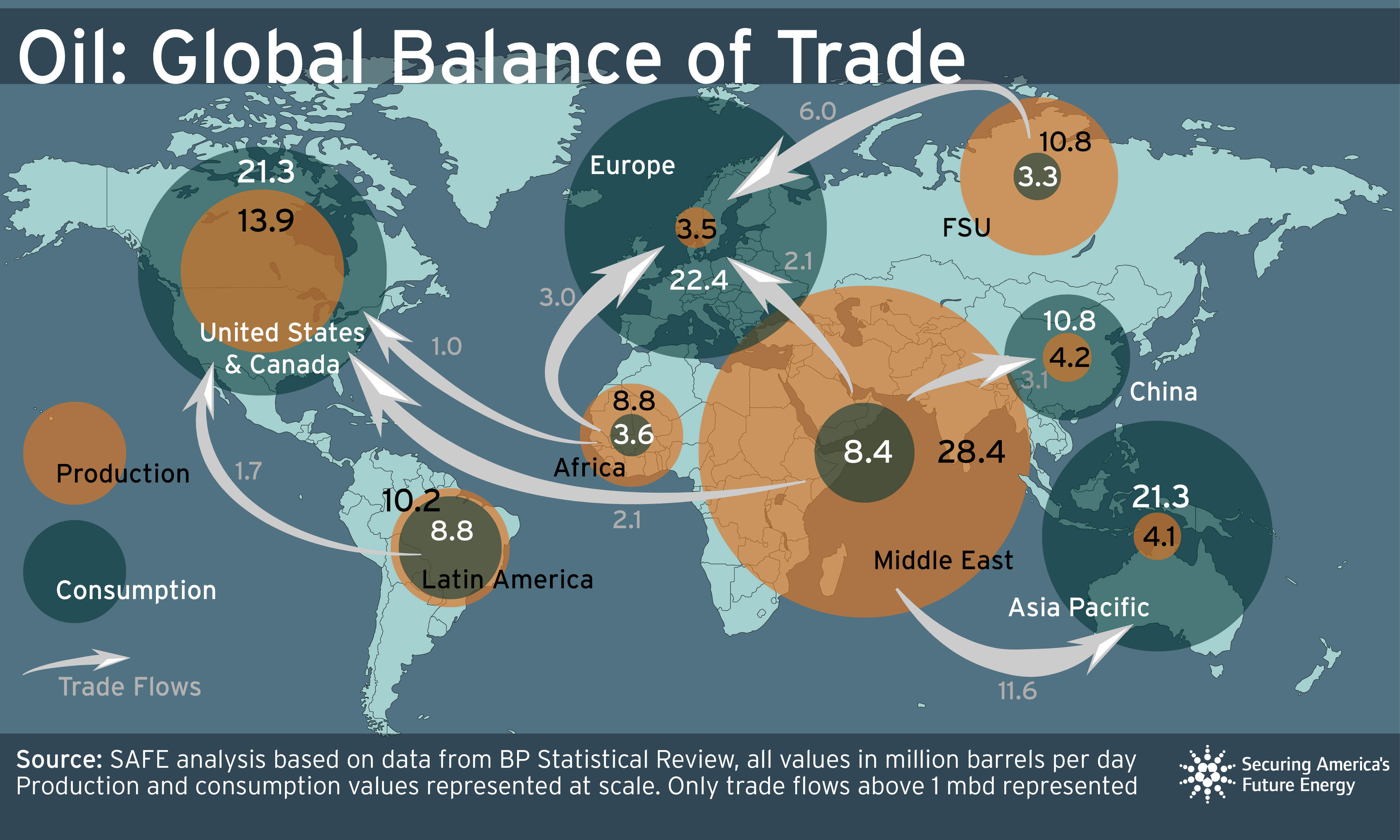
SAFE’s research has shown that across commodities, be it oil, critical minerals, or electricity, the solution to price volatility, high prices, and supply shortages is three-fold: address supply and demand side challenges, while also pursuing disruptive breakthroughs. SAFE’s foundational “Oil Shockwave” wargame from 2005 argued that the U.S. should diversify transportation fuels and increase more domestic oil and gas production while advancing energy efficiency to reduce the influence high oil prices have on the economy. When China restricted export of rare earth elements in response to U.S. industrial policy, SAFE argued that this presented a case for diversification of mineral supply chains by developing alterative sourcing options to those controlled by the Chinese Communist Party. Similarly, in response to rising electricity bills coinciding with rapid demand growth, SAFE argued that permitting reform and embracing all forms of energy can meet demand and grow excess capacity to lower prices. Price volatility reflects structural dynamics in commodity markets, and temporary policy patches tend to be ineffective in addressing the root cause of price shocks. The right policy solutions differ widely between power, transportation fuel, and minerals/materials…but should always try and address challenges holistically.
Since the benefits of a gas tax holiday are marginal, the costs should also be considered. Federal gas tax receipts go directly toward the Highway Trust Fund to finance the construction and maintenance of roads, bridges, railroads, ferries, and other mass transit systems. In fact, the HTF is responsible for over 20% of all transportation spending in the United States.
Unfortunately, the HTF is teetering on the brink of insolvency. At the beginning of fiscal year (FY) 2026, the fund’s balance was $74.3 billion. This balance is what remains after Congress appropriated a $118 billion cash infusion to the HTF in the Infrastructure Investment and Jobs Act of 2021. The HTF consistently draws its balance, because Federal gas tax revenues are insufficient for the fund to meet its obligations. This year, the Congressional Budget Office expects HTF revenues—around 84% of which come from motor fuel taxes— to reach $47.3 billion. Comparatively, outlays are expected to exceed $78.7 billion. This stark gap between revenues and expenditures is expected to result in the HTF’s balance reaching $0 in 2028. Considering most motor fuel taxes expire in September 2026, without reauthorization, the HTF could reach insolvency even faster.
The precarious financial position of the Highway Trust Fund and the primary role it plays in infrastructure financing demonstrates the high costs associated with gas tax holidays. While President Trump’s proposal does not specify an end-date, limiting the gas tax holiday to summer months will result in an estimated loss in revenue of almost $10 billion.
This loss in funding is merely the first-order cost of a Federal gas tax holiday. HTF dollars go toward projects that underpin our economy, like the Interstate Highway System, freight rail network, and bridges and tunnels that connect our nation’s harbors. Without adequate infrastructure, people and goods cannot move to where they are needed. Deferring $10 billion in infrastructure investment that should have occurred this year will result in economic losses that compound over time.
The diminutive consumer benefits of a gas tax holiday well outweigh the costs to the U.S. transportation system. The soon-to-be penniless HTF poses a looming policy crisis that Congress must address in due time, and a Federal gas tax holiday would accelerate this bankruptcy before lawmakers are prepared to act. Beyond this structural problem, the roughly $10 billion in foregone transportation revenue from a pause in gas tax collections would have consequences for both the U.S. economy. While high gas prices certainly have costs associated with them, a short-term fix like a gas tax holiday may leave consumers with a bigger bill in the end.



 Twitter