The recent oil production boom in the United States, while astounding, has created a misleading narrative that the United States is no longer dependent on oil imports. Reports of surging domestic production, calls for relaxation of the crude oil export ban, labels of “Saudi America,” and the recent collapse in oil prices have created a perception that the United States has more oil than it knows what to do with.
This view is misguided. While some forecasts project that the United States could become a self-sufficient oil producer within the next decade, this remains a distant prospect. According to the April 2015 Short Term Energy Outlook, total U.S. crude oil production averaged an estimated 9.3 million barrels per day in March, while total oil demand in the country is over 19 million barrels per day.
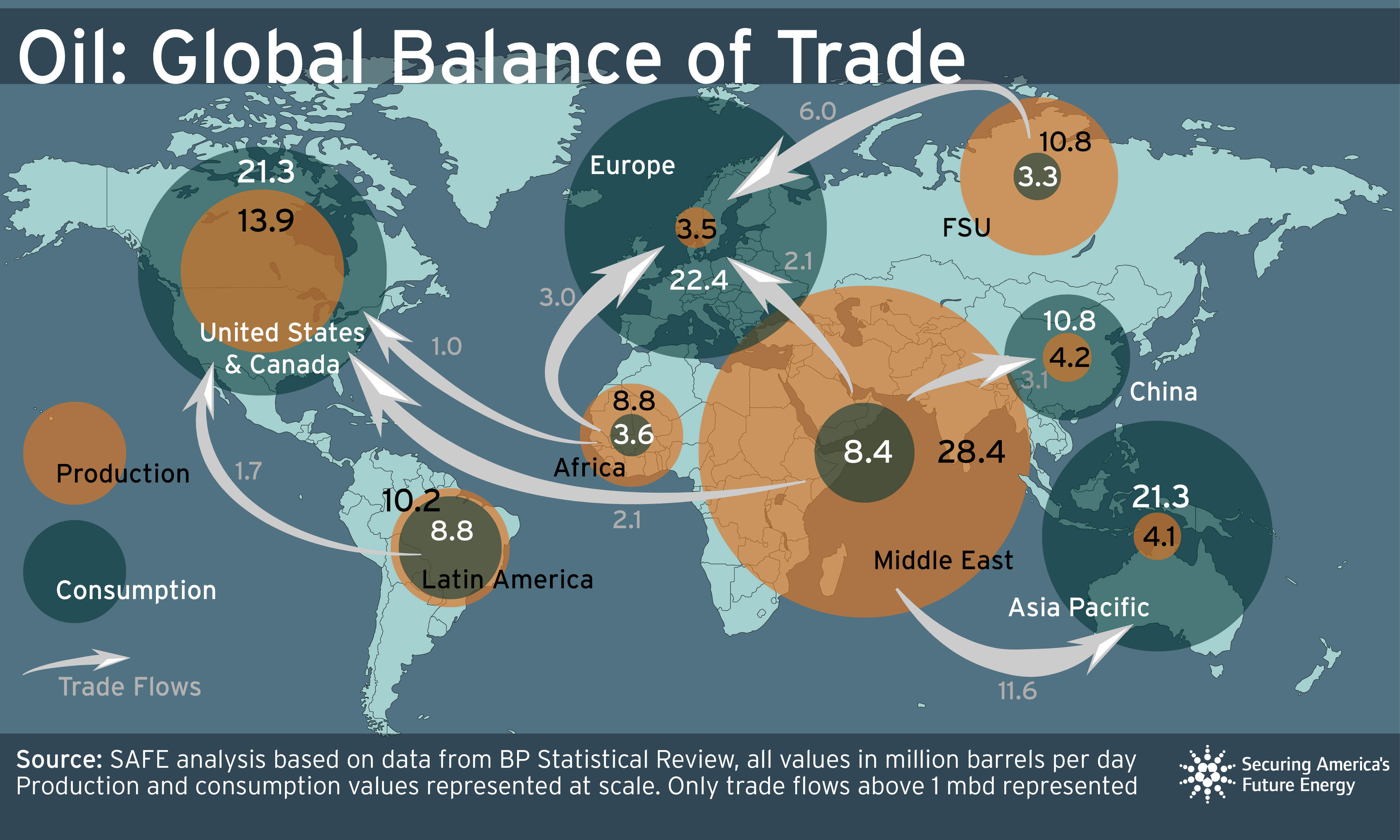
This graphic helps illustrate the regional variations in crude oil supply and demand. North America, Europe, and Asia all run significant production deficits, with the Middle East, Africa, Latin America, and Former Soviet Union are global engines of crude oil supply.













Subscribe